|
|
Biography |
|
|
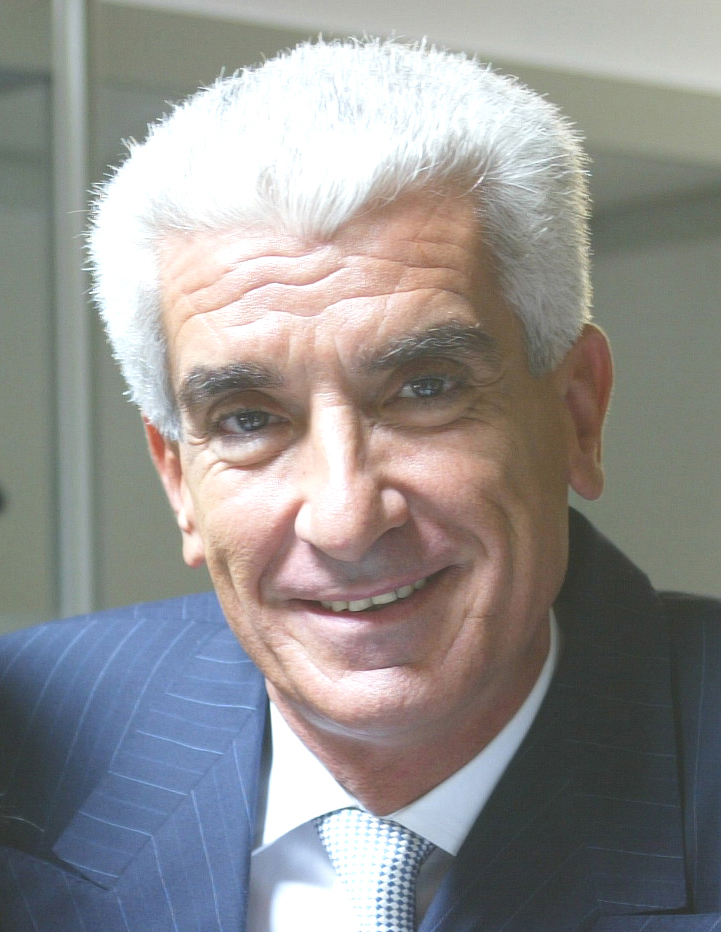 Claudio Carlone is a communication senior professional specialised in strategic advisory services, management, public and institutional relations.
Former President and CEO of Hypothesis and advisor at the Agency for Technology and Innovation (Italian Government), at the present he works in support of manufacturing companies, financial institutions, public administration and other organizations.
Born in Rome in 1952, Carlone received a degree in Chemical Engineering and Biology from the University of Rome “la Sapienza” (1977) and later conducted research in Biotechnology at the Italian National Research Council (CNR).
In 1982, Carlone launched a career in journalism and communications, focusing on innovation and its economics, intellectual property, the relationship between enterprise and society, and the role of new technology in value creation and development processes.
In 1989, he founded Hypothesis, a communication company, where he has gained a 20 year experience in public and institutional relations, and special projects, both at a national and an international level.
He has worked as a strategic advisor in the hi-tech and financial sectors, serving on the boards of listed companies and as a partner of the Nuovo Mercato of Borsa Italiana (the Italian Stock Exchange’s index of hi-tech firms).
Other activities include acting as the Coordinator of the Milan Chamber of Commerce’s Advisory Board for the Innovation Centre Project, launched in 2005; As the Secretary of the Commission for the recovery plan for the former Falck industrial area in Sesto San Giovanni (Milan) and as the Coordinator of the Committee for Science and Technology (CAST) of the City of Milan.
Carlone has chaired or participated in numerous national and international seminars, conferences and congresses, both as a speaker and a chairperson.
Past president of the Rotary Club Milano-Ovest, sits on the board of APE (Italian Association for Economic Development).
Claudio Carlone is a communication senior professional specialised in strategic advisory services, management, public and institutional relations.
Former President and CEO of Hypothesis and advisor at the Agency for Technology and Innovation (Italian Government), at the present he works in support of manufacturing companies, financial institutions, public administration and other organizations.
Born in Rome in 1952, Carlone received a degree in Chemical Engineering and Biology from the University of Rome “la Sapienza” (1977) and later conducted research in Biotechnology at the Italian National Research Council (CNR).
In 1982, Carlone launched a career in journalism and communications, focusing on innovation and its economics, intellectual property, the relationship between enterprise and society, and the role of new technology in value creation and development processes.
In 1989, he founded Hypothesis, a communication company, where he has gained a 20 year experience in public and institutional relations, and special projects, both at a national and an international level.
He has worked as a strategic advisor in the hi-tech and financial sectors, serving on the boards of listed companies and as a partner of the Nuovo Mercato of Borsa Italiana (the Italian Stock Exchange’s index of hi-tech firms).
Other activities include acting as the Coordinator of the Milan Chamber of Commerce’s Advisory Board for the Innovation Centre Project, launched in 2005; As the Secretary of the Commission for the recovery plan for the former Falck industrial area in Sesto San Giovanni (Milan) and as the Coordinator of the Committee for Science and Technology (CAST) of the City of Milan.
Carlone has chaired or participated in numerous national and international seminars, conferences and congresses, both as a speaker and a chairperson.
Past president of the Rotary Club Milano-Ovest, sits on the board of APE (Italian Association for Economic Development).
|
|
|
|
|
|
|
Abstract |
|
|
|
|
Sustainable Development ad Corporate Social Responsibility |
|
|
|
|
|
The population is rising. Climate change is threatening the environment and the agricultural system. How will we feed everyone? How will we provide healthcare to everybody? How could we foster a sustainable development and, moreover, how could we induce corporations to pursue non only mere profit but making of social concerns a new business tool?
Is big business to blame for the state we are in? They are simply acting within the confines of a marketplace that for the last decades or more, is myopically focused on creating ‘shareholder value.’ The demand for reporting on quarterly profits means that investments in long-term sustainability issues will continue to be sacrificed where there is no immediate financial return to be made.
There is no single accepted definition of Corporate Social Responsibility (CSR), although most assume that there is an inherent compatibility with profit-making and fulfilling the needs of society.
The idea of CSR has become a growing topic in boardrooms in the last few years, with the debate centering on what obligations companies have - to be socially responsible - and what impact it can have on the bottom line.
For public companies, the issue can be particularly daunting as they seek to please shareholders, lure investors, build a brand, and all the while preserve a pristine reputation in the public eye.
Will the “market for virtue” be sufficiently important to make it in the interest of all firms to behave more responsibly?
|
|
|
|
|